

The ACTION Framework™

Table of contents:
Executive summary
The ACTION Framework™
Using the framework within your group
Tips for getting started
Example of the ACTION Framework™ in action
1. Executive summary
In fiction, every dystopia is a diagnosis. Every hero’s journey is a blueprint. Every villain reveals how power operates. We just need a framework to translate that fiction into action.
The ACTION Framework™ gives you that — six steps that take you from *holy shit, this feels familiar!* to *here’s what we’re doing about it in our zip code*.
This isn’t about becoming a full-time activist or chaining yourself to buildings. It’s about using the stories you already love to identify systems of separation in your community and taking concrete, manageable steps to build alternatives.
Whether your group connects over books, shows, or movies, this framework helps you channel that shared energy into local change. You’ll learn to see the patterns, understand your position, target what you can actually impact, and build sustainable action with others who give a damn.
Ready to turn your living room into a training ground for revolution? Let’s dig in . . .
2. The ACTION Framework™

What systems of power is this story exposing?
Every story shows us how power works. The Hunger Games isn’t about archery — it’s about manufactured scarcity and spectacle as control. The Handmaid’s Tale isn’t just about fertility — it’s about patriarchal control through religious extremism.
This first step in the ACTION Framework™ is about identifying the real-world systems your story is critiquing.
Critical step one.

Where do you sit within these systems?
We all have different relationships to power based on our identities and circumstance. The second step in the ACTION Framework™ helps you and your group honestly assess your own positions — your privileges, your vulnerabilities, your complicity, and your potential leverage.
Leave the judgement at the door — this is just clarity and a baseline to understand from where you’re all starting.

What specific, local change can you actually impact?
Here’s where we get practical.
You can’t just overthrow the Capitol, but you CAN organize against that predatory landlord. You can’t stop global surveillance, but you CAN teach digital security to your neighbors.
Match the story’s themes to your community’s needs. Get granular and deep in the weeds here. This step is where the magic happens.

Start small, fail forward, adjust as needed
Action doesn’t mean perfection. Like, ever.
Start with something manageable — a community fridge, a skill share, a local campaign. Learn what works, what doesn’t, who shows up, what’s missing.
Every single attempt teaches you something valuable.

Build coalitions, find allies, share power
You’re not the only group that gives a damn. Find others working on similar issues.
Share resources.
Build networks.
Support each other’s efforts.
The protagonist never saves the world alone — and neither will you.

Make it sustainable, celebratory, and generative
Burnout kills movements in a heartbeat. Build in joy, rest, and rotation of responsibilities. Celebrate small wins. Create systems that outlast individual enthusiasm.
The work continues when it feeds people rather than depleting them. This is paramount.
3. Using the framework within your group
Meeting structure:
Watch/read/discuss your story (like normal)
Spend 20-30 minutes working through ACTION steps
Commit to one concrete action before your next meeting
Check in on progress at your next gathering
Repeat with new stories or deeper actions
Group dynamics:
4-10 people is ideal (enough perspectives, still intimate)
Rotate facilitation (nobody’s the permanent leader)
Honor different capacity levels (not everyone can do everything)
Keep it local and specific (your neighborhood, your community)
4. Tips for getting started
Pick the right story:
Start with something your whole group is excited about. Enthusiasm matters more than “importance”.
Start ridiculously small:
Your first action can be tiny. Map your neighborhood. Share skills. Host a dinner. Small actions build the muscle for bigger ones.
Document everything:
Keep notes on what works. You’re creating a blueprint others can use.
Embrace the awkward:
The first few times will feel weird. That’s normal. Push through the discomfort of actually doing something.
Connect fiction to reality constantly:
Always bridge from the story to your actual community. That’s where the magic happens.
5. Example of the ACTION Framework™ in action
Let’s look at The Hunger Games . . .
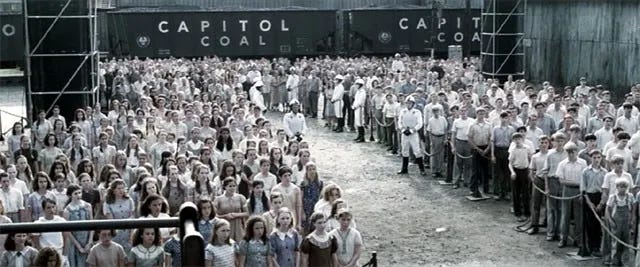
A — Analyze the system:
The story exposes how extreme economic inequality is maintained through spectacle, forced competition between oppressed groups, and media manipulation that turns survival into entertainment.
C — Check your position:
Our group has varying economic stability — some secure, others paycheck-to-paycheck. We’re all furious about billionaires playing space games while people can’t afford insulin.
T — Target real change:
Build a mutual aid network for sharing resources (tools, skills, funds) while organizing to expose local wealth hoarding — starting with that developer who owns half downtown while people sleep outside.
I — Implement and iterate:
Create resource sharing spreadsheet, start emergency fund with $5/month contributions, research and publicize who owns what in our city, arrange listening sessions in tent communities with council members, coordinate site visits where unhoused neighbors can speak directly to officials, etc.
O — Organize together:
Connect with existing mutual aid groups, partner with local journalists to expose wealth concentration, link with groups fighting for living wages.
N — Nurture the work:
Monthly potlucks where we share resources AND celebrate wins, rotate leadership, remember we’re building long-term solidarity not charity.